Meal Planning
Structuring the week: a measured approach to wholefood preparation
Tobias Coverdale·
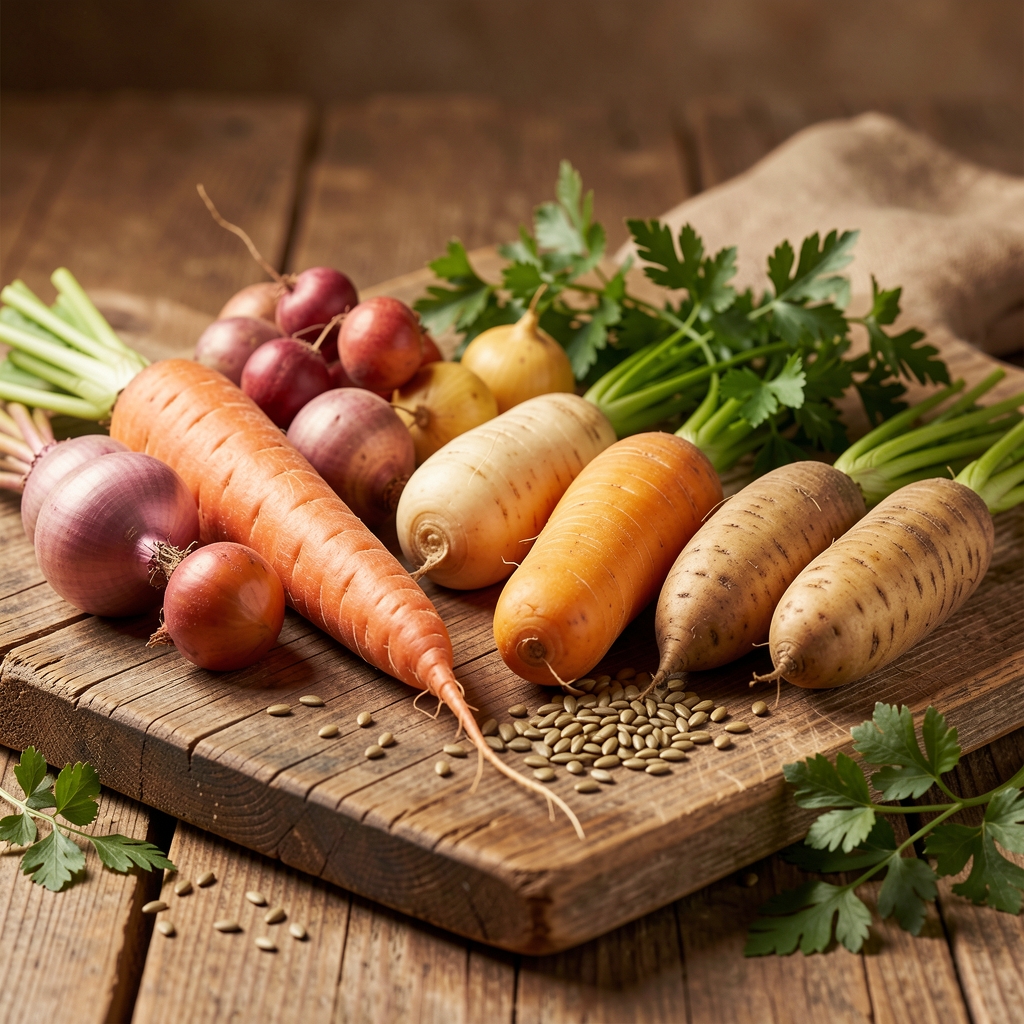
When the light shortens and the market stalls shift from stone fruit to celeriac, a different kind of cooking begins. It is quieter, less decorative, and considerably more satisfying than the vivid salads of July. This is a set of notes from a season spent returning to whole grains, roasted alliums, and the particular, almost structural satisfaction of slow-cooked legumes.
Nutritional awareness through the seasons is not a new idea, but it is one that gets periodically rediscovered — often with unnecessary drama. The argument is simpler than it tends to be made: different seasons make different produce available at peak density and flavour, and cooking to match that availability tends to produce meals that are more varied, more nutritionally broad, and more interesting to eat over a sustained period.
In practical terms, the autumn shift means moving away from raw preparations and toward longer-cooked dishes. Beetroot, parsnips, swede, celeriac, and the entire allium family — onions, leeks, shallots, garlic — become the structural vocabulary of the plate. These vegetables carry significant dietary fibre and a range of micronutrients that complement the shift in daylight and activity patterns that typically accompany the season.
This is not an argument for seasonal cooking as a dogma. It is an observation that there is a coherence to cooking what is in season, and that coherence tends to express itself in meals that feel, without much planning, more rounded in their nutritional profile than those assembled from ingredients shipped from various hemispheres regardless of time of year.
The grain question — which ones, how much, how often — generates a disproportionate amount of anxiety in contemporary nutritional writing. The practical reality is more settled than the discourse suggests. A rotation of three or four whole grains, incorporated into weekday cooking with modest consistency, provides a substantial foundation of complex carbohydrates, B vitamins, and dietary fibre without requiring constant calculation.
Over the course of the autumn season documented here, the rotation settled into: pearl barley for soups and braises, where it absorbs flavour and provides a satisfying texture; farro for grain-based salads and warm bowls; brown rice as a neutral base for legume-heavy dishes; and oats in their less processed form for weekday breakfasts. None of these choices are remarkable. The point of documenting them is not novelty but consistency.
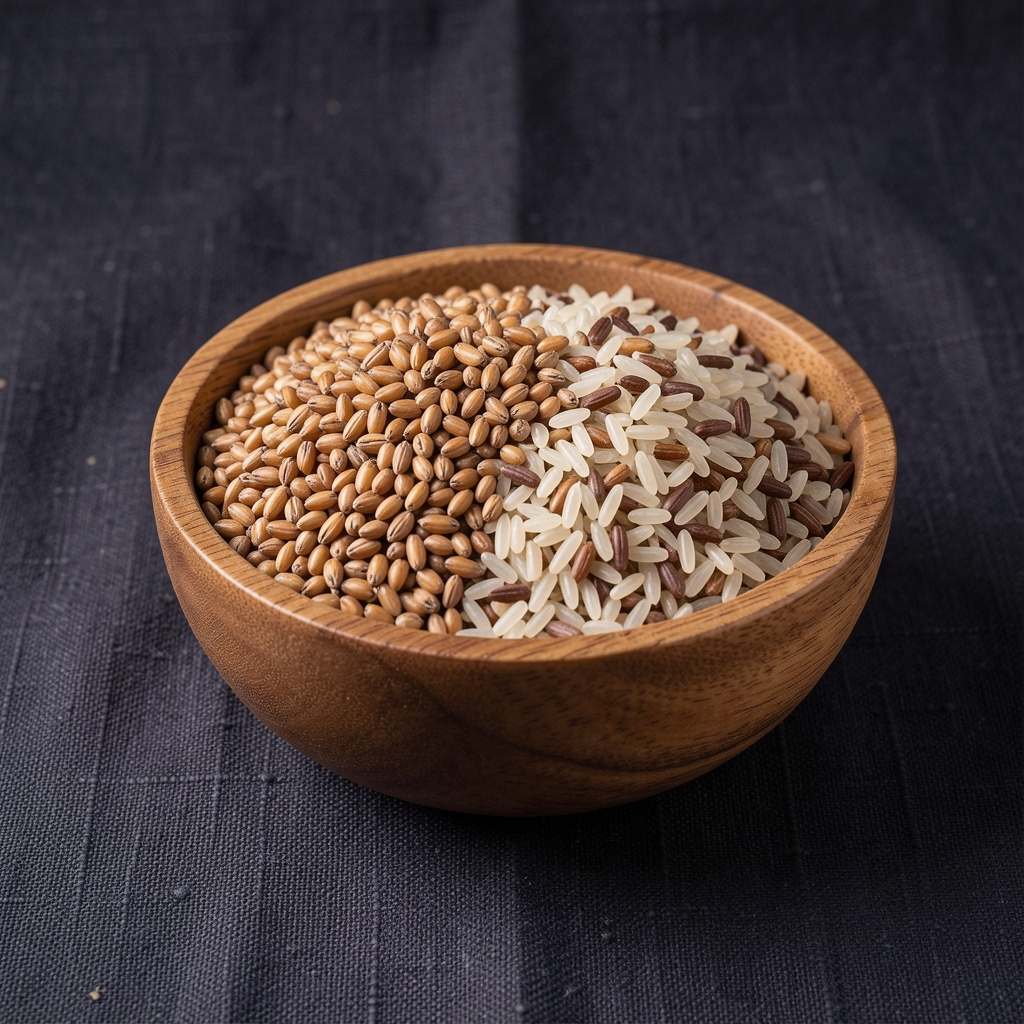
Pearl barley, farro, and brown rice — the autumn grain rotation. Studio composition under soft natural light.
Pearl barley deserves particular attention because it is underused in modern domestic cooking relative to its nutritional and culinary value. It is dense with soluble fibre, notably beta-glucan, a compound discussed extensively in published research for its documented influence on maintaining stable blood-glucose responses after eating. It is also inexpensive, stores well, and responds well to long, slow cooking — making it a natural companion to autumn braises and slow soups.
"A rotation of three or four grains, incorporated with modest consistency, provides a more secure nutritional foundation than any single 'optimal' choice repeated to exhaustion."
If whole grains are the anchor of the autumn plate, legumes are its engine. The dried-to-cooked transformation — soaking, then a long, unhurried pot on the stove — is one of the most nutritionally and economically efficient acts in domestic cooking. A portion of dried black beans or puy lentils, cooked slowly with aromatic vegetables, produces a high-protein, high-fibre meal for a fraction of the cost of animal protein.
The flavour of properly cooked legumes is one that convenience-cooking shortcuts frequently sacrifice. Tinned legumes are useful and should not be dismissed, but there is a textural and flavour difference between a dried cannellini bean simmered for two hours with a bay leaf and a strip of kombu, and its tinned equivalent. The slower-cooked version holds together better on the plate, absorbs surrounding flavours more actively, and has a creamier, more satisfying texture that contributes to a longer-lasting sense of satiety after a meal.
This matters for everyday nutrition because satiety — the length of time a meal keeps hunger at bay — is one of the most practically significant variables in how people manage their food intake over a day. Protein and fibre density are the two strongest predictors of satiety in published research, and legumes provide both in a form that is affordable, versatile, and entirely compatible with vegetarian and omnivore diets alike.
One observation from this season's cooking that stands out in retrospect: the consistent presence of alliums — in almost every dish, in one form or another — created a flavour continuity that made the rotation feel cohesive rather than repetitive. A slow-caramelised onion base, built over thirty minutes on low heat, provides a sweetness and depth that connects a lentil soup, a grain bowl, and a roasted vegetable tray to the same underlying logic.
This is worth noting because flavour is undervalued in nutritional discussions that focus primarily on macronutrients and micronutrients. A meal that is nutritionally sound but uninteresting to eat will not sustain a habit. The best evidence for a dietary pattern being workable over the long term is simply that the person eating it consistently chooses to return to it, not because of discipline, but because the food is genuinely rewarding to eat.
Alliums contribute significantly to this quality. Leeks braised in a modest amount of olive oil until completely soft have a sweetness that is difficult to obtain from any other vegetable. Roasted garlic, pressed out of its papery skin and spread across a piece of dense rye bread, is an entirely satisfying lunch. The flavour work that alliums do in everyday cooking is quiet but structural, and it pays dividends in the experience of meals over an extended period.
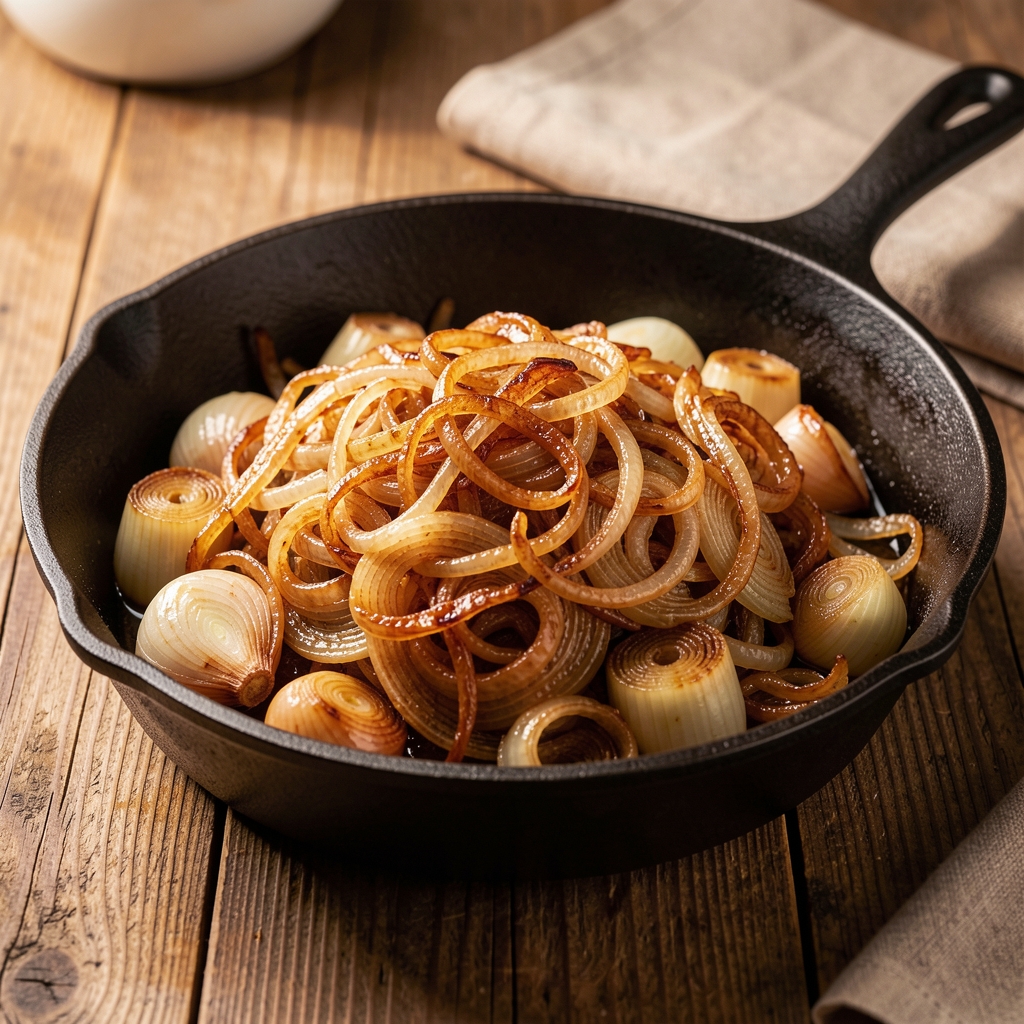
Caramelised alliums — thirty minutes of patience. The flavour foundation of the autumn plate.
The final element of the autumn cooking record worth documenting is fermentation — specifically, the inclusion of simple fermented foods as an accompaniment to the main plate rather than as a featured ingredient. A spoonful of kimchi alongside a grain bowl. A few tablespoons of naturally fermented sauerkraut with a roasted vegetable dish. A small serving of live yoghurt with the grain-based breakfast.
Published research on the relationship between fermented foods and gut ecology has become more substantial over the past decade. The mechanisms are still being refined, but the direction of the evidence suggests that regular, modest consumption of fermented foods is associated with a more diverse gut microbiome, and that microbiome diversity is a marker associated with positive outcomes across multiple aspects of general wellbeing.
The practical point here is not to overstate the case for fermentation — a small serving of kimchi is not a transformation, and anyone approaching these foods as a quick resolution to a gut complaint should speak with a qualified nutrition professional. The more modest observation is that fermented foods, incorporated regularly and in appropriate quantities, add both flavour complexity and a plausible contribution to gut ecology that makes them worth including in a varied autumn plate.
Articles published on Foraleni Review are editorial in nature and reflect the writers' observations on everyday wellness practices. The content is not intended as professional advice, nor as guidance for the management of any specific condition. Readers with specific concerns about their daily routines are encouraged to speak with a qualified wellness professional.

Harriet Marsden writes on food systems, seasonal nutrition, and the cultural habits of everyday cooking. She has contributed to Foraleni Review since its founding and holds a background in food science communication.
More from this writer